
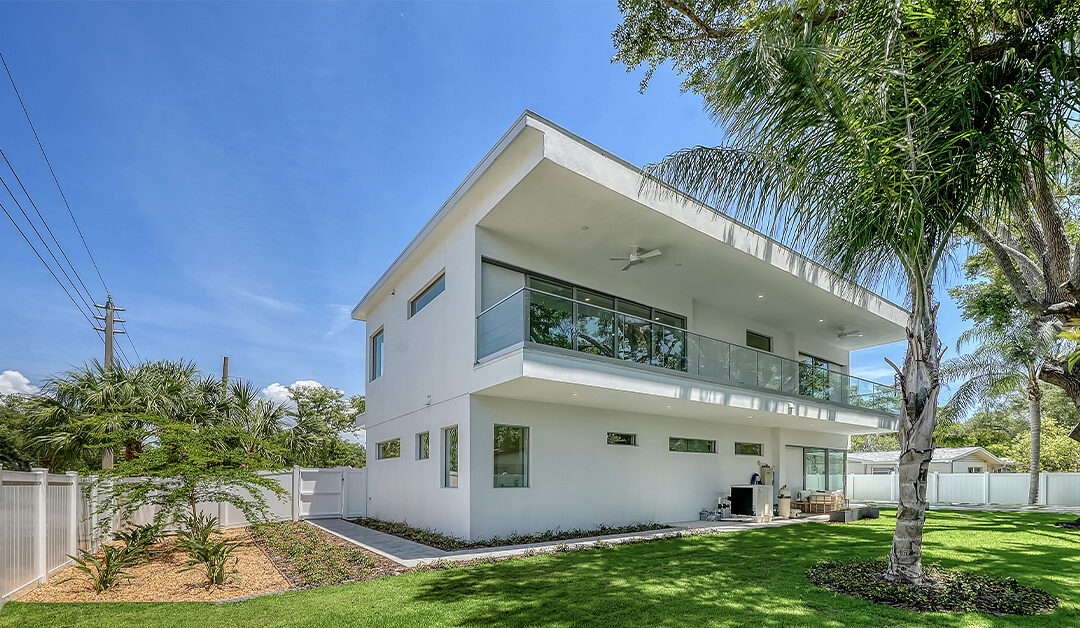
If you’re building a custom home in Florida, geometry might be the last thing on your mind — but it should be one of the first. Living here, we know hurricanes are a stark reality, and for homeowners and investors, creating a hurricane-resistant home is crucial. Sarasota’s picturesque views and strategic location make it prime real estate. But ensuring resilience without sacrificing style poses a real challenge. That’s where structural geometry comes in.
How Structural Geometry Adds Strength Without Sacrificing Style
In structural design, geometry is more than just shapes and forms. It defines how forces are distributed across a building. In hurricane-prone areas, the primary goal is to withstand high winds and water forces, and aerodynamically efficient designs are essential. Roofs with a 30-degree pitch, for example, are less likely to generate wind lift compared to flat roofs — the slope lets wind pass over more smoothly, reducing potential damage.
Circular and rounded building designs also offer superior resistance. Structures with curves present fewer flat surfaces where wind pressure can build up. Research conducted by the Federal Emergency Management Agency (FEMA) supports this, suggesting that round and octagonal shapes can endure severe wind conditions better than traditional angular designs.
Trusses and arches contribute to resilience too. Trusses distribute loads more evenly across surfaces, minimizing stress on any single point. This principle harnesses the inherent strength of triangles, known for their ability to bear heavy weights and withstand lateral forces. Arches, celebrated since Roman times, combat compression forces effectively and add an elegant touch to modern architecture.
Masonry plays a role as well. Floridians often opt for strengthened concrete blocks or reinforced brick walls, which create a strong barrier against storm impact. Combining these with cleverly designed geometric layouts increases a building’s ability to absorb and redirect stress. Flying buttresses might sound like a relic of Gothic cathedrals, but they work much like a structural shock absorber — deflecting lateral forces away from the main body of the building.
Innovative materials complement these designs. Smart glass and modern composites can be integrated creatively, maintaining a sleek aesthetic while adding resilience. Miami-Dade County’s strict building codes often highlight this necessity, influencing designs throughout Florida.
All these elements together allow for a seamless blend of style and strength. In Sarasota’s vibrant architectural landscape, hurricane-resistant homes can still retain elegance and individuality. Thoughtful use of structural geometry transforms a home from mere shelter into a statement of resilience — safe without sacrificing personal taste or architectural flair.
Why Materials Like Concrete and Steel Outperform Traditional Framing
Modern home construction in Sarasota, and along the sun-drenched Gulf Coast, has evolved significantly from the traditional wood framing seen in older coastal homes. The materials you choose can dramatically impact a property’s durability and longevity — especially in areas prone to severe weather. Concrete and steel have emerged as the clear frontrunners for several reasons.
Concrete shines due to its unparalleled strength and durability. Its composition allows it to withstand hurricane-force winds better than wood, and Florida building codes underscore the importance of using materials that meet high wind and impact standards. Concrete’s robustness against both wind and water intrusion makes it a prime choice in regions where hurricanes are a yearly concern. Its thermal mass also helps maintain a consistent indoor temperature, contributing to energy efficiency and potentially reducing air conditioning costs.
Steel offers a different set of advantages: flexibility and resilience. Its strength-to-weight ratio surpasses that of wood, making it ideal for modern home designs that feature large open spaces and high ceilings. Steel structures are resistant to termites and other pests — a perennial concern in coastal areas like Sarasota — and its non-combustibility reduces fire hazards, no small thing in a state with sweltering summers.
Both materials also support environmental sustainability. Concrete can incorporate recycled materials like fly ash, reducing its carbon footprint, and local sourcing for components lessens transportation emissions. Steel is 100% recyclable and can be repeatedly repurposed without any loss of quality. This appeals to environmentally conscious builders and buyers alike, as well as investors interested in sustainable projects that meet stringent building regulations.
Innovation in prefabrication has made both materials even more practical. Concrete and steel components can be manufactured off-site, reducing labor costs and construction waste. Precast concrete panels and steel framing systems accelerate the building timeline — a significant win for investors looking to build, flip, or rent properties quickly.
Safety, sustainability, and savings are compelling reasons to choose these materials for modern home construction around Sarasota. As demand grows for homes that combine sleek design with longevity, concrete and steel offer substantial benefits over traditional framing, aligning with both market trends and practical necessity.
The Design Lessons Builders Have Learned From Past Hurricane Seasons
Every hurricane that sweeps through Florida leaves behind more than physical damage — it imparts lessons that shape future architectural practices. In Sarasota, builders have translated those lessons into designs that stand up to the elements while still meeting the aesthetic demands of the region. Embracing wind-resistant architecture is a critical adaptation that has evolved directly from past hurricane seasons.
One of the principal insights from past storms is the importance of aerodynamics. Rectangular structures are more susceptible to wind pressure than homes with rounded exteriors, and Sarasota builders have increasingly adopted circular or dome-shaped designs that withstand severe wind conditions more effectively. Studies by the National Institute of Standards and Technology (NIST) confirm that curved surfaces disrupt wind flow, reducing the pressure exerted by high-speed gusts — prompting architects to incorporate semicircular layouts and rounded rooflines that enhance both structural integrity and visual appeal.
Roof construction has also been fundamentally reconsidered. Hurricane Andrew in 1992 made the vulnerabilities of traditional gable roofs impossible to ignore. Today, builders prefer hip roofs — four-slope constructions that create less wind resistance and are far less likely to uplift during a storm due to their lower profile. Roof overhangs are also minimized to reduce stress points during high winds.
Enhanced anchoring systems are another hard-won lesson. Strong gusts can easily lift a poorly anchored structure, so Sarasota builders now use advanced techniques like hurricane straps and clips that tie the roof and walls together more securely. Current Florida building codes mandate these connective reinforcements, and for good reason.
Windows and doors demand equal attention. Past hurricanes revealed that these openings are often the first points of failure. Sarasota homes now frequently feature impact-resistant windows and reinforced door systems designed to withstand projectile impacts and high wind pressure. Laminated glass and multi-point locking mechanisms provide added protection, often complemented by storm shutters as a secondary line of defense.
Even landscaping has evolved. Tree positioning and selection now account for a species’ wind resistance and root stability. Live oaks, known for their robust structure, are strategically placed to deflect wind and reduce debris — small decisions that make a measurable difference when a storm rolls through.
By merging past experience with progressive design principles, Sarasota’s construction industry continues to push the boundaries of architectural resilience. These informed practices ensure homes remain safe havens even when nature is at its worst, all while preserving the coastal area’s distinctive charm. For homeowners and investors seeking properties that are as stylish as they are durable, these lessons offer practical, lasting solutions.
Frequently Asked Questions
What makes a modern home more hurricane-resistant than an older one?
Modern homes are designed with newer building codes that prioritize hurricane safety. They incorporate features like impact-resistant windows, reinforced roof-to-wall connections, and wind-resistant doors. Advances in engineering have led to more aerodynamic shapes that better withstand high winds. Compared to many older homes, which may not meet current safety standards, modern designs focus on structural integrity and resilience.
How do flat or low-slope roofs hold up during strong storms?
Flat or low-slope roofs are designed to minimize wind resistance. With proper drainage systems, they prevent water accumulation during the heavy rains common in storms. These roofs are often built with durable materials like modified bitumen or TPO (Thermoplastic Polyolefin) to withstand wind uplift and water infiltration. Reinforced seams and secure fastenings also contribute to their storm resilience.
Are modern materials like steel and concrete better for Florida weather?
Yes, modern materials like steel and concrete are particularly suited for Florida’s hurricane-prone environment. Steel provides excellent strength-to-weight ratios, making structures both robust and flexible under stress. Concrete offers superior durability and resistance against wind and water damage. Together, these materials help create safer, longer-lasting homes that are less susceptible to severe weather.
Design That Defies the Storm
As Sarasota and its surrounding coastal communities embrace resilient architectural strategies, combining traditional lessons with modern aesthetics ensures both homeowners and investors find lasting value in their properties. Whether you’re looking to create a stylish coastal retreat or a robust investment property, understanding and applying these principles will guide you toward the best possible outcome. Start with wind-resistant designs and choose materials like concrete and steel for durability — steps that enhance your home’s longevity while contributing to the architectural character this region is known for.
There’s no shortage of opportunity to build homes that are both beautiful and storm-ready. Courtyard Modern offers personalized consultations to help align your vision with cutting-edge building practices. Reach out to learn more about how we can help you navigate custom home construction in Sarasota, or visit one of our completed properties to see the seamless fusion of style and resilience for yourself.