
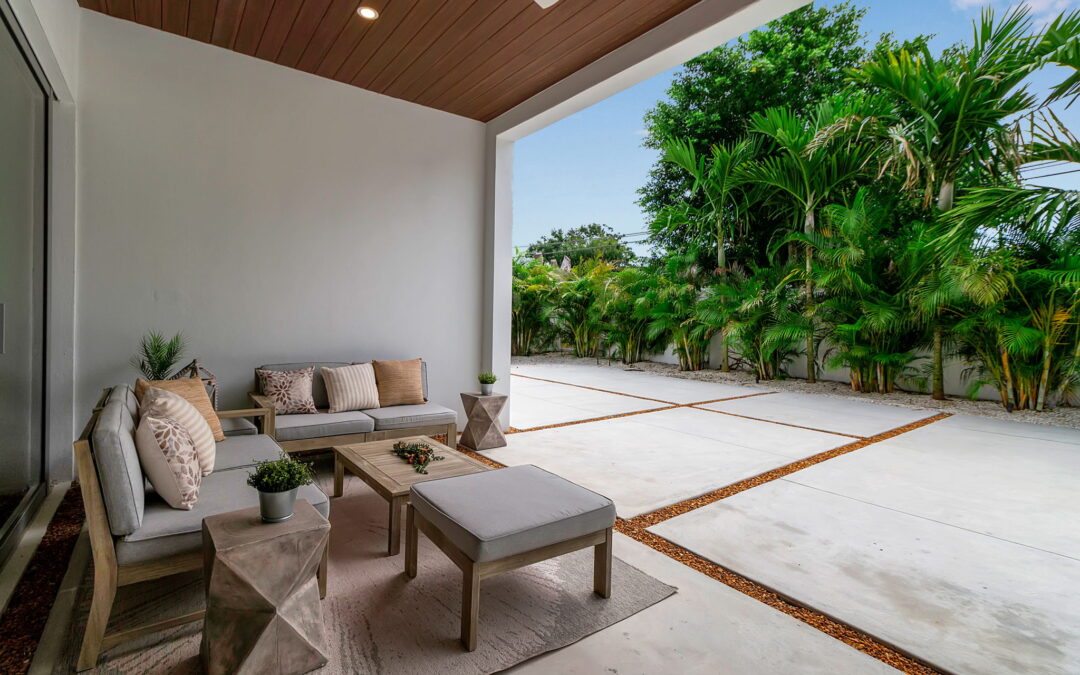
If you’re planning a custom home on Florida’s Gulf Coast, the 2025 hurricane season forecast isn’t background noise — it’s one of the most practical planning tools available. In Sarasota, storm season shapes construction timelines, material costs, design choices, and long-term property values in ways that reward those who pay attention and penalize those who don’t.
How Seasonal Forecasts Influence Construction Timelines
Storm season doesn’t pause for construction schedules — and in Sarasota, that’s something every builder learns fast. For anyone planning custom homes along Florida’s Gulf Coast, understanding the 2025 hurricane forecast isn’t just useful background information. It directly shapes timelines, budgets, and how well a project holds up when the weather turns.
Florida’s hurricane season runs June through November, but the precision of modern forecasting has changed how builders respond to it. NOAA’s latest 2025 prediction model points to a slight uptick in storm activity compared to recent years, driven by warmer ocean temperatures that create more favorable conditions for storm development. That’s not cause for alarm — it’s cause for better planning.
Some tasks are far more weather-sensitive than others. Pouring a concrete foundation, for example, can be compromised by excessive moisture or high winds. Builders who track seasonal forecasts can schedule those critical phases during calmer stretches — a late autumn start, say, rather than pushing through peak storm months. That kind of timing isn’t overly cautious; it’s just smart.
Material supply is another pressure point. Hurricane season tends to slow transportation and spike demand simultaneously, which means contractors who stockpile essentials beforehand keep projects moving while others stall waiting on deliveries.
Insurance deserves a fresh look too. A forecast calling for higher storm activity may warrant additional coverage or new policy clauses. In coastal Sarasota, premium increases are a real possibility, making early adjustments far less painful than scrambling after a named storm.
Worker safety shapes scheduling as well. Having a clear evacuation plan and a system for securing materials and equipment before a storm hits can dramatically cut post-storm recovery time. Building that flexibility into crew schedules — rather than treating it as an afterthought — keeps projects on track and keeps people safe.
Finally, keeping nearby homeowners and businesses informed of a storm-adjusted construction schedule goes a long way. Transparency builds goodwill and signals that the team running the project is thinking beyond the next pour date.
In Sarasota, folding seasonal forecasts into construction planning isn’t optional anymore. The 2025 hurricane data isn’t just a timeline variable — it’s a foundation for every strategic decision in real estate development here.
Why Homeowners Are Prioritizing Build Quality Over Square Footage
More square footage used to be the default goal. In Sarasota, that’s changing. Homeowners here are increasingly choosing build quality over size — and the shift makes a lot of sense when you consider what coastal living actually demands.
Durability tops the list. High-quality materials and construction methods help a home stand up to humidity, salt air, and storm seasons that test structures year after year. A well-built 2,200-square-foot home along the Gulf will outperform a sprawling but shoddily constructed one every time.
Sustainable building is part of the picture too. The National Association of Realtors found that 62% of home buyers now prioritize sustainable features — energy-efficient windows, better appliances, smarter materials. In a state with as much sun as Florida, those choices pay off quickly in reduced utility costs and longer material lifespans.
Resale value follows quality. Homes with superior craftsmanship and thoughtful finishes attract buyers willing to pay for them. Simply adding square footage without investing in construction integrity tends to deliver far weaker returns.
There’s also something to be said for how these homes actually feel to live in. Instead of large, underused rooms, quality-focused builds offer spaces that are tailored and intentional — often with seamless indoor-outdoor flow that suits the Sarasota lifestyle particularly well. You use every square foot because every square foot was designed with purpose.
Getting there means working closely with architects and builders who understand local conditions. Courtyard Modern brings that combination of aesthetic sensibility and functional know-how that coastal building really requires.
Smart home technology has become part of the quality equation as well. Statista projects smart home penetration will exceed 53% market presence, and Sarasota buyers are increasingly expecting these features — security systems, climate controls, integrated lighting — as standard rather than optional.
Build quality isn’t just a preference trend. It’s a smarter investment strategy for anyone putting down roots on Florida’s Gulf Coast.
The Ripple Effect of Hurricane Data on Sarasota’s Real Estate Trends
Hurricane data doesn’t just influence what gets built in Sarasota — it shapes what buyers want, what investors fund, and how neighborhoods develop over time.
On the construction side, NOAA’s 2025 predictions have pushed builders further toward resilient materials and techniques. Sarasota’s building codes are updated regularly in response to new storm data, and the results are measurable: research from the Insurance Institute for Business and Home Safety shows that structures built to enhanced standards can experience 50% less hurricane damage. That’s not a marginal improvement — it’s a fundamental difference in how a home performs when a storm makes landfall.
Property values reflect this shift. Homes with impact windows, reinforced roofs, and storm-resistant structural systems are drawing stronger buyer interest and commanding higher prices. Zillow research found that properties in areas with updated, rigorous building codes appreciated at rates up to 15% higher post-update than comparable homes without those upgrades. In a coastal market like Sarasota, resilience is a genuine selling point — not just a checkbox.
Sellers and listing agents have noticed. Storm-resistant features now appear prominently in real estate listings, and buyers have started treating them as decision-makers rather than nice-to-haves. Homes associated with programs like Monroe County’s “Hurricane Smarts” initiative — which emphasizes both safety and sustainability — consistently show stronger market performance and steadier demand.
Investment strategy is evolving alongside buyer behavior. Investors are steering away from historically flood-prone areas and toward developments with solid elevation and structural resilience built in. Data from the Florida Climate Center shows property premiums in flood-vulnerable zones have risen 35% over the past decade — a figure that makes location and construction quality very tangible financial considerations.
Community planning has adapted as well. New Sarasota developments increasingly incorporate larger buffer zones, elevated infrastructure, and neighborhood-wide storm mitigation systems. These aren’t just safety features — they help communities recover faster and maintain long-term livability.
For builders, buyers, and investors, reading the hurricane data correctly isn’t pessimistic — it’s how you make confident decisions in a dynamic coastal market.
Frequently Asked Questions
How does the hurricane forecast affect new construction in Florida?
The hurricane forecast plays a direct role in shaping Florida construction plans. Builders in Sarasota pay close attention to predicted storm activity because it influences both timeline and budget. Higher-than-average storm forecasts often mean increased costs for materials designed to handle severe weather — impact-resistant windows, reinforced roofing systems, and the like. Planning around that forecast helps ensure new homes are built to endure what the season may bring, which ultimately protects both the investment and the people living in it.
Should I delay my build if a major storm season is predicted?
Not necessarily. Whether to delay depends on your specific timeline and circumstances. Sarasota’s building industry has deep experience with storm preparedness, and construction can move forward safely with the right planning — scheduling weather-sensitive work outside peak storm months, securing job sites thoroughly before any approaching storms, and building flexibility into the overall timeline. Your builder can walk you through a plan that accounts for the forecast without putting your project on hold indefinitely.
Do builders make changes to designs based on yearly storm trends?
Yes. In hurricane-prone areas like Sarasota, design adaptations based on storm data are standard practice. That might mean stronger structural frameworks, elevated foundations, improved drainage, or materials selected specifically for wind and water resistance. Builders track both storm patterns and evolving building codes to make sure every project is as resilient as it is livable — which matters both for long-term safety and for resale value down the line.
Forecasting Strength, Not Fear
Navigating Sarasota’s real estate market takes more than a good floor plan. It takes a strategy that accounts for the coastal environment — storm seasons, building codes, material choices, and all. Whether you’re timing your construction start to avoid peak hurricane months or selecting finishes that will hold up to salt air for decades, the decisions you make at the planning stage have lasting consequences.
If you’re ready to build a custom home designed with both beauty and resilience in mind, Courtyard Modern is ready to help. View completed properties, or reach out for a free consultation and let’s talk through what your vision looks like — built to last on Florida’s Gulf Coast.