
Gulf Coast breezes can be a gentle companion in Sarasota — or a formidable force during hurricane season. When planning or investing in custom homes within 30 miles of the coastline, understanding how roof design affects wind performance is critical for protecting your property when storms roll in.
Why tile and pitch design make a difference in wind performance
Mediterranean roof design is a popular option in the region, adding a classic flair to coastal homes while delivering real durability in high-wind situations. Clay or concrete tiles add weight, which helps stabilize a roof under pressure. Tiles are interlocked and sealed together, creating a unified surface that’s far less prone to lifting in hurricanes. According to the Federal Alliance for Safe Homes, tile installations — when properly secured — can withstand wind speeds up to 125 mph.
Roof pitch matters just as much as material. In hurricane-prone areas, a steep pitch — commonly found in Mediterranean designs — plays a key role in wind performance. Slopes between 30 and 45 degrees are considered ideal because they resist wind uplift, the phenomenon where strong gusts create a vacuum effect and try to pull the roof away from the structure. Think of it like holding a flat board versus an angled one into the wind — the angle simply sheds force more effectively. More gradual slopes let wind catch under the roof edges, increasing the chance of serious damage. The Building Science Corporation suggests that steep roofs help deflect winds upward and away, preventing significant pressure from building up.
It’s also worth considering advancements in underlayment technology. High-quality, water-resistant underlayments guard against intrusions that can occur when tiles break during storms — a critical second line of defense that can significantly reduce interior water damage.
Simple maintenance practices also strengthen a Mediterranean roof’s performance. Regular inspections for damaged or dislodged tiles keep the roof resilient over time. Addressing loose tiles before a storm hits prevents them from becoming dangerous projectiles in strong winds.
Ridge and hip tiles deserve attention too. These components cover key junctions and edges — exactly where wind attacks most aggressively — and reinforcing them can significantly reduce overall damage risk.
In Sarasota, having a roof designed to meet specific wind resistance criteria isn’t a luxury. It’s a smart investment. Thoughtful design combined with consistent maintenance delivers long-lasting peace of mind when stormy weather arrives.
How proper underlayment extends roof life and prevents leaks
Tile roofing in Sarasota is a beautiful choice — but the real hero sits beneath the tiles. Proper underlayment is what separates a roof that lasts from one that fails the first time a major storm rolls through.
Sarasota’s intense sun, heavy rainfall, and occasional hurricanes put constant pressure on roofing materials. That makes selecting the right underlayment far more than a technical detail. Synthetic underlayments, increasingly common in quality construction, offer superior durability compared to traditional felt paper. They provide better UV resistance, are generally lighter, and install with fewer seams — reducing the vulnerable points where water can sneak in.
A study by the University of Florida found that synthetic underlayments can last up to four times longer than asphalt felt, making them a wise investment for any roof built to last. In hurricane-prone areas, that durability pays off: even if some tiles are compromised, a robust underlayment keeps water out.
Correct installation matters just as much as material selection. Overlaps must be carefully executed so no seam becomes a potential leak point — especially on the complex rooflines common in Sarasota’s coastal and Mediterranean homes, where intersecting angles create more opportunities for water infiltration.
Ventilation plays a supporting role here too. Without adequate airflow beneath the roof deck, moisture accumulates, leading to mold growth and wood rot. According to the U.S. Department of Energy, proper attic ventilation removes moisture and heat, extending the lifespan of roofing materials while improving energy efficiency.
Investing in high-quality underlayment and ensuring it’s correctly installed can dramatically reduce maintenance costs over the roof’s life. A well-maintained roof protects the home and strengthens its marketability — and preventing problems before they start is always cheaper than fixing them after the fact.
By pairing your tile roofing with the right underlayment, you’re taking a concrete step toward protecting your home against unpredictable Gulf Coast weather and preserving its value for the long run.
The balance between aesthetics and function in roof selection
In Sarasota, the right roof does two jobs at once — it has to look good and hold up against Florida’s weather. Getting that balance right isn’t optional; it’s what separates a smart investment from an expensive mistake.
For most residents and investors, that balance starts with material choice. Mediterranean tile roofing stands out as both stylish and functional. The warm terracotta tones of clay tiles pair naturally with Sarasota’s lush coastal scenery, but the appeal goes beyond looks — these tiles are dense, robust, and built to resist harsh elements.
According to the National Association of Home Builders, clay tiles can achieve a lifespan of up to 100 years when properly installed. Concrete tiles offer similar appeal and longevity at a slightly lower price point. Either way, the interlocking design delivers enhanced wind resistance — research from the Insurance Institute for Business & Home Safety confirms that tiled roofs outperform many other materials in severe weather.
Metal roofing is gaining traction too, particularly for homeowners drawn to cleaner, more modern aesthetics. It can mimic traditional shingles or lean into a bold, minimalist look. Metal’s reflective surface reduces cooling costs — a real advantage in Sarasota’s sun-heavy climate — and it typically lasts 40 to 70 years, according to industry assessments.
Material is only part of the equation, though. Roof design itself shapes how well form and function align. Solar shingles, for example, pull double duty: they’re functional solar panels and visually cohesive roofing elements. With sustainability becoming a bigger priority, more Sarasota homeowners are exploring these options as both an energy investment and an aesthetic statement.
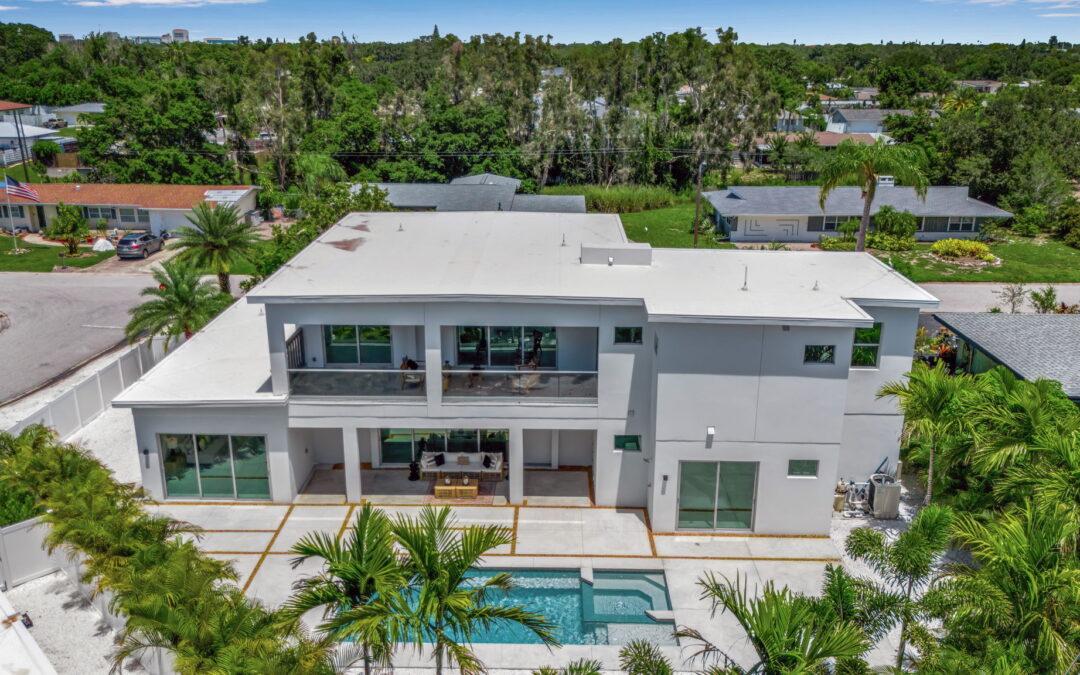
Flat roof styles common in modern homes open up other possibilities — rooftop gardens, photovoltaic systems, or clean architectural lines that complement contemporary design. Each choice adds both practical value and visual appeal.
If you’re building or renovating, working with professionals who understand Sarasota’s specific conditions makes a meaningful difference. Local expertise ensures your style choices don’t come at the expense of performance, and tailored guidance helps align what you want with what actually works on the Gulf Coast.
The interplay between material, design, and climate isn’t something to navigate alone — but when you get it right, the result is a roof that looks as good as it performs and holds up for generations.
Frequently Asked Questions
Are tile roofs really better for high winds than shingles?
Yes, tile roofs generally perform better in high winds than asphalt shingles. Their heavier weight resists lifting during storms — particularly valuable in Florida’s hurricane-prone climate. The interlocking design of Mediterranean-style tile roofs further strengthens their wind resistance, which is why they remain a popular choice for Sarasota homeowners.
What kind of maintenance does a Mediterranean-style roof need in Florida?
Mediterranean-style roofs need regular attention to stay in top shape in Florida’s climate. Inspections at least twice a year help catch broken or loose tiles early. Keeping debris cleared from the roof and gutters prevents water buildup, and applying a sealant every few years protects tiles from moisture and extends their lifespan.
Can I use clay roof tiles on a modern home without changing its design?
Absolutely. Clay roof tiles work well on modern homes when chosen thoughtfully. With a range of colors and finishes available, you can find tiles that complement clean, contemporary lines rather than clash with them. Pairing clay tiles with large windows or minimalist architectural details can actually create a striking contrast that enhances the home’s overall character.
Beauty Built to Withstand Anything
Choosing the right roof for your Sarasota home or investment property means more than picking a style — it requires weighing material durability, design, and underlayment technology together to build something that genuinely holds up. For anyone planning to build or invest in the coastal and Mediterranean-style homes this region is known for, a strategic approach to roof design isn’t optional. It’s the foundation of a property that performs as well as it looks.
As you think through your next steps, consider working with professionals who bring real local expertise to the table. Courtyard Modern’s team is ready to help with a free consultation to discuss your custom home plans or walk you through completed properties where form and function come together beautifully. Contact us today to explore the possibilities.